AP CSP Exam Reflection
Current Standing
My current progress on the AP CSP exam components:
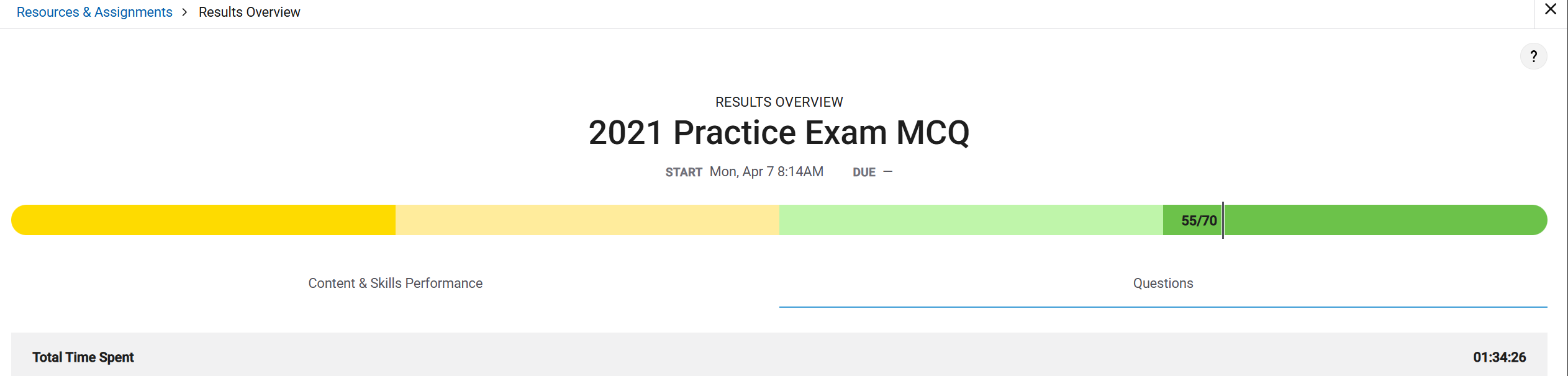
- Multiple Choice Exam: 55/70 (78.6%)
- Create Performance Task: Anticipated 6/6 (100%)
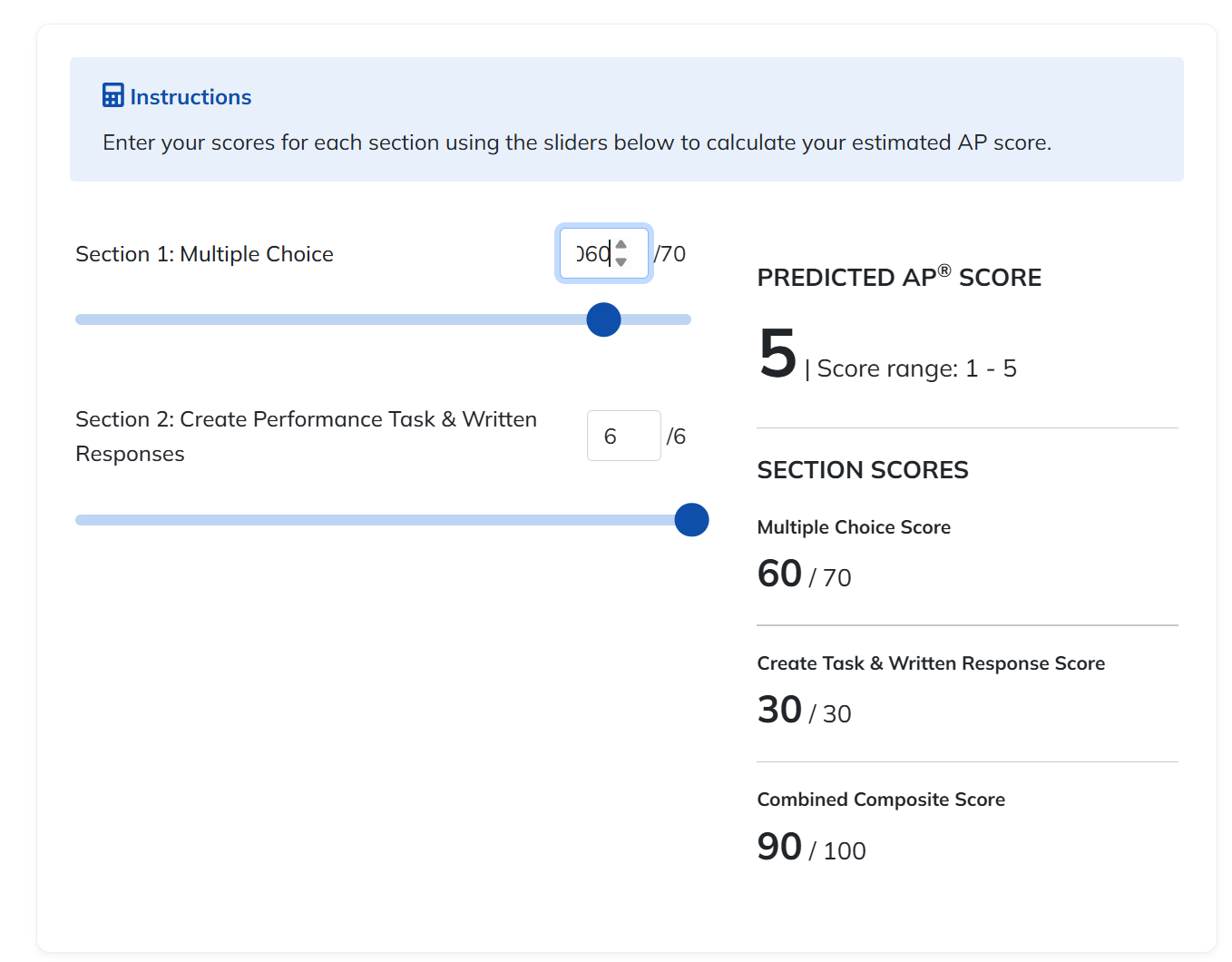
According to Albert.io, I need to achieve at least 60/70 on the MCQ portion to secure a score of 5, assuming full marks on my Create Performance Task.
Areas for Improvement
After analyzing my performance, I’ve identified several topics that require focused attention to improve my overall score by at least 5 points.
| Topic | Accuracy | Questions | Priority |
|---|---|---|---|
| 3.4 Strings | 0% | 1 | High |
| 3.9 Developing Algorithms | 0% | 1 | High |
| 5.3 Computing Bias | 0% | 1 | High |
| 3.12 Calling Procedures | 20% | 5 | High |
| 3.6 Conditionals | 33% | 6 | High |
| 1.4 Identifying and Correcting Errors | 40% | 5 | Medium |
| 3.10 Lists | 40% | 5 | Medium |
| 3.7 Nested Conditionals | 50% | 2 | Medium |
| 3.8 Iteration | 55% | 11 | Medium |
Nested Conditionals Sample Question
```
PROCEDURE determineCategory(score, age, isPremium)
IF (score > 85)
IF (age < 18)
RETURN "Junior Elite"
ELSE
IF (isPremium)
RETURN "Premium Pro"
ELSE
RETURN "Standard Pro"
END IF
END IF
ELSE
IF (age < 18)
IF (score > 70)
RETURN "Junior Advanced"
ELSE
RETURN "Junior Basic"
END IF
ELSE
IF (isPremium AND score > 70)
RETURN "Premium Advanced"
ELSE
RETURN "Standard"
END IF
END IF
END IF
END PROCEDURE
```
**Which call returns "Premium Advanced"?**
A. determineCategory(75, 20, true)
B. determineCategory(90, 25, false)
C. determineCategory(65, 20, true)
D. determineCategory(80, 19, true)
## My Mistake
I chose **B** incorrectly.
**Why I picked B:**
With score 90 > 85, I followed the first branch, then to the ELSE (age 25 not < 18). I mixed up the conditions and thought "Premium Advanced" would be assigned when isPremium is false.
**Why A is correct:**
For option A (75, 20, true):
- score 75 is NOT > 85, so we go to the first ELSE
- age 20 is NOT < 18, so we go to the nested ELSE
- isPremium is true AND score > 70 is true, so it returns "Premium Advanced"
I was too focused on the first condition (score > 85) and didn't carefully trace the other execution paths.
## Key Takeaways for Nested Conditionals:
1. **Trace execution systematically**: Follow each condition step-by-step, tracking which branch the code will take based on the inputs.
2. **Use visualization techniques**: Draw a flowchart or decision tree for complex nested conditionals to better understand the paths.
3. **Pay attention to compound conditions**: When a condition uses logical operators like AND or OR, carefully evaluate the entire expression.
4. **Watch for sequential dependencies**: Later conditions may depend on decisions made in earlier branches.
5. **Test boundary cases**: Try values that are at or near the boundaries of condition checks (e.g., exactly 85 vs. 86 for score).
Improvement Strategy
To improve my score from 55 to 60+, I’m focusing on these key areas:
-
Zero-Accuracy Topics: I’ll dedicate specific study sessions to master strings, algorithm development, and computing bias concepts.
-
High-Impact Areas: Calling procedures and conditionals represent 11 questions combined with low accuracy scores, making them prime targets for improvement.
- Practice Approach: Rather than reviewing general concepts, I’ll focus on practicing with questions that specifically address my weak areas, particularly:
- Tracing procedure calls and understanding parameter passing
- Complex conditional logic, especially with multiple Boolean operators
- String manipulation and common algorithms for string processing
- Study Resources: I’ll use College Board’s AP Classroom practice questions, my textbook’s practice problems, and dedicated online resources for targeted practice.
By concentrating on these areas, I expect to gain the 5+ additional points needed to achieve a score of 5 on the AP CSP exam.